02 · Operations · 6 min
Fully staffed, partial, or support only
Three ways to run pre-leasing. Match coverage to community size, construction timeline, and budget.
Pre-leasing is a coverage decision
Before the building exists, someone still has to answer questions, schedule tours, follow up on inquiries, and hold a waitlist. How many hours you put on that work — and whether those hours are dedicated or shared — is the staffing model.
The three practical options are fully staffed, partially staffed, and support only. They are not quality tiers. They are coverage levels. An 80-unit community delivering in 14 months does not need the same desk as a 400-unit phased community in a competitive submarket.
| Compare | Fully staffed | Partially staffed | Support only |
|---|---|---|---|
| Hours | Full leasing hours, most weekdays | Limited days or appointment-only | No dedicated leasing desk |
| Who talks to prospects | Dedicated leasing team | Shared team or part-time specialist | Owner, GC, or existing staff |
| Tours | Walk-in plus scheduled, model or trailer | Scheduled hard-hat or virtual | Virtual, site visit by request |
| Typical cost | About $400,000 | About $180,000 | About $20,000 |
| Fits | Large communities, competitive lease-up | Mid-size, longer construction | Smaller assets, experienced operators |
Fully staffed
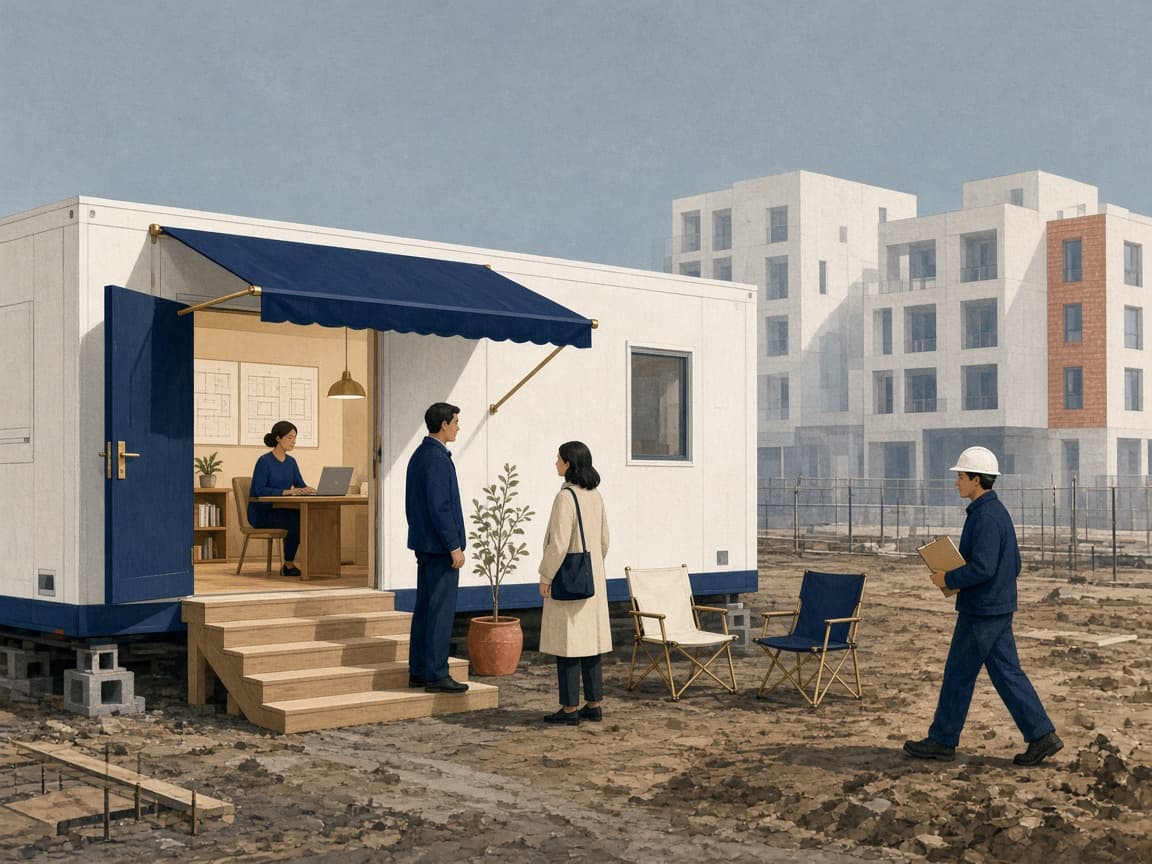
A dedicated leasing person or team owns the pipeline. Typical setup: a construction trailer or nearby model, posted hours, walk-in capacity, and someone whose job is to convert interest into applications before opening. Plan on about $400,000 for the full program — salaries, space, and marketing before any rent is collected.
Choose this when inquiry volume will be high, when the submarket is competitive, or when the community is large enough that a missed week of follow-up actually moves occupancy. Fully staffed teams still need a public site. Most first visits happen on a phone, not at a trailer.
- Own response time. Same-day replies are the product.
- Keep one source of truth for availability, rents, and delivery dates so the team does not freelance.
- Measure tours and applications against spend, not just “people stopped by the trailer.”
Partially staffed
Coverage exists, but it is not a full-time desk. Common patterns: a specialist shared across two or three communities, afternoon hours two days a week, or appointment-only tours with a floating agent. Digital intake does the waiting; people show up for the conversations that matter. A typical partial program runs about $180,000.
This is the default for many mid-size projects. It fails when the website cannot collect a complete inquiry, or when nobody owns the inbox on the days the specialist is elsewhere. Partial staffing only works if the hours you do staff are protected — and if every lead is captured when you are not there.
Support only
There is no dedicated pre-leasing hire. The developer, property manager, or GC answers serious prospects. The “support” layer is the system: a public site, a domain, an inquiry inbox, and marketing that runs without a person sitting in a trailer. A more minimal program like this typically costs about $20,000.
Support only is honest for smaller communities, infill, or operators who already have a leasing rhythm. It is a poor fit if nobody checks inquiries, if the only public face is a listing that cannot go live until certificate of occupancy, or if the person answering email is also running the job site.
What does not change with headcount
Staffing changes how conversations happen. It does not replace the assets every pre-leasing program needs:
- A place to send people. A URL that works today, not a “coming soon” page that dies after the campaign.
- A way to capture intent. Name, email, unit interest, and timeframe — stored, not trapped in a Facebook comment.
- A way to show the community. Renderings, a site map, unit types, and a delivery window accurate enough to trust.
- An owner of the inbox. Even support-only needs a named person and a response window.
Pick the lightest coverage that can answer demand at the speed you create it. Then spend the rest of the budget on making the future community visible — which is the next two guides.